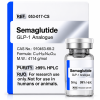
Mazdutide 10mg: Research, Mechanism, Clinical Evidence and Quality Guide
Introduction
Interest in Mazdutide 10mg is growing as research into next-generation metabolic medicines expands. Mazdutide is an investigationally studied peptide-based medicine that activates two important hormone receptors: the glucagon receptor (GCGR) and the glucagon-like peptide-1 receptor (GLP-1R). This dual activity makes it different from medicines that act only on the GLP-1 pathway.
Clinical studies have examined mazdutide for chronic weight management and blood-glucose control in adults with type 2 diabetes. Research has reported reductions in body weight and improvements in measures of glycaemic control, although outcomes vary by trial, dose, study population and treatment duration.
The term Mazdutide 10mg is particularly relevant because a 10mg dose was investigated in a US-based Phase 2 clinical trial. However, it is essential to distinguish a dose studied in clinical research from an approved commercial presentation or an authorised treatment regimen. A product advertised as “Mazdutide 10mg” should not automatically be assumed to be an approved medicine.
This guide explains what mazdutide is, how its dual-receptor mechanism works, what clinical research has found, and why regulatory status, product authenticity and medical oversight matter.
What Is Mazdutide?
Mazdutide is a long-acting peptide agonist designed to activate both the glucagon receptor and the GLP-1 receptor. It is sometimes described as a dual glucagon and GLP-1 receptor agonist.
These receptors are involved in the regulation of appetite, energy balance, glucose metabolism and other metabolic processes. By targeting both pathways, mazdutide is being studied as a potential treatment for obesity, overweight and type 2 diabetes.
The GLP-1 pathway is associated with glucose-dependent insulin secretion, appetite regulation and slower gastric emptying. The glucagon pathway has a role in glucose regulation and energy metabolism. Researchers are investigating whether activating both receptors can produce complementary metabolic effects.
Mazdutide has progressed beyond early laboratory research. It received regulatory approval in China for chronic weight management in eligible adults in June 2025, followed by approval for glycaemic control in adults with type 2 diabetes. Those approvals are specific to the Chinese regulatory market and do not establish approval in every country.
What Does Mazdutide 10mg Mean?
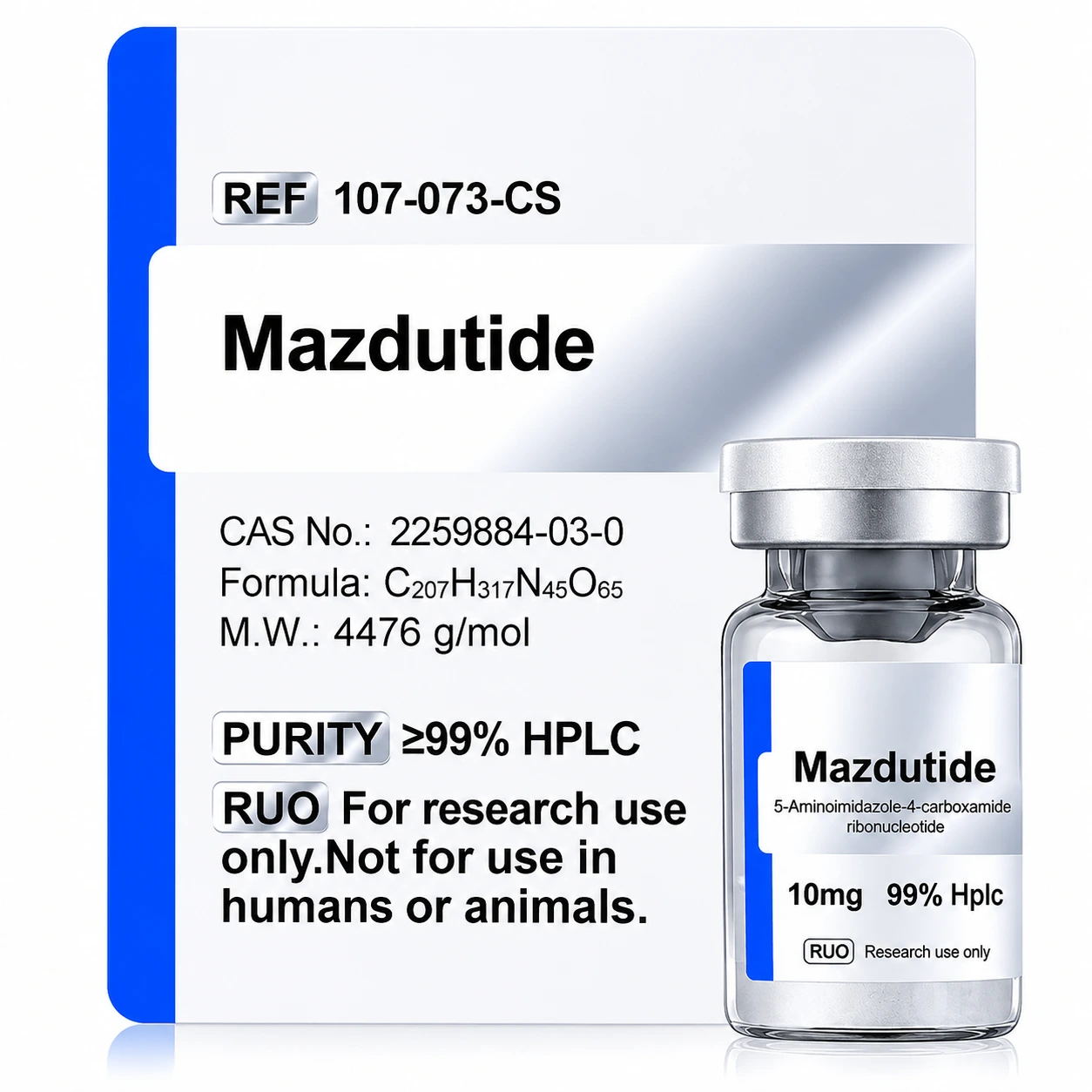
The phrase Mazdutide 10mg generally refers to a stated quantity or strength associated with mazdutide. It is also relevant to clinical research because a 10mg treatment group was included in a US Phase 2 trial involving adults with overweight or obesity.
Nevertheless, three terms should not be confused:
- Research dose: An amount administered to participants under a clinical trial protocol.
- Product strength: The quantity of active ingredient stated on a product label or container.
- Approved treatment regimen: A dose and schedule authorised by a medicines regulator for a specific indication and population.
These are not interchangeable. The fact that 10mg has been studied does not mean that a 10mg product is an approved standard treatment, or that an individual should use that amount.
In China, mazdutide has received approval for specified indications, but the approved status and authorised product information should be checked against the current local regulator and official prescribing information. In the United Kingdom, European Union, United States and other markets, users should not assume that Chinese approval applies locally.
How Does Mazdutide Work?
Mazdutide’s defining feature is its activity at two hormone receptors.
1. GLP-1 receptor activity
GLP-1 is an incretin hormone involved in the body’s response to food. Activation of the GLP-1 receptor can support glucose-dependent insulin secretion, reduce inappropriate glucagon release, influence appetite and slow gastric emptying.
These effects help explain why GLP-1-based medicines are used in the management of certain metabolic conditions.
2. Glucagon receptor activity
Glucagon is a hormone involved in maintaining blood glucose and regulating energy use. Its receptor also plays a role in metabolic pathways involving the liver and energy expenditure.
Mazdutide’s glucagon receptor activity is being investigated alongside its GLP-1 activity. The objective is to explore whether the combined effects can contribute to weight reduction and metabolic improvements.
3. A dual-receptor approach
Rather than relying on a single pathway, mazdutide is designed to activate both receptors. This is the central scientific distinction behind the molecule.
However, a plausible mechanism does not guarantee a particular result for an individual. Clinical outcomes must be assessed through controlled trials, longer-term safety monitoring and regulatory review.
What Does Clinical Research Say About Mazdutide 10mg?
One important source of evidence is a US-based, multicentre, randomised, double-blind, placebo-controlled Phase 2 trial published online in The Lancet Diabetes & Endocrinology in August 2026.
The study included 179 adults with overweight or obesity who did not have type 2 diabetes. Participants were assigned to placebo or one of three mazdutide treatment groups: a 3–6mg regimen, 10mg or 16mg. Treatment continued for 48 weeks, with the primary weight-change assessment at week 32.
At week 32, the study reported the following estimated mean changes in body weight:
- Mazdutide 3–6mg group: −7.3%.
- Mazdutide 10mg group: −15.6%.
- Mazdutide 16mg group: −18.1%.
- Placebo group: −0.9%.
These findings indicate that the 10mg group experienced a substantial average reduction in body weight compared with placebo in this particular trial. They should not be interpreted as a guaranteed outcome or as a prediction of what any individual will experience.
Gastrointestinal adverse events were the most common side effects reported. These were mostly mild to moderate, although discontinuation due to adverse events occurred most frequently in the 16mg group, primarily because of gastrointestinal disorders.
The trial is useful because it provides direct evidence involving a 10mg treatment group. It remains Phase 2 evidence, however, and does not by itself establish a universally approved 10mg treatment regimen.
Mazdutide and Type 2 Diabetes Research
Mazdutide has also been studied in adults with type 2 diabetes. Phase 3 research in China evaluated 4mg and 6mg treatment groups against placebo or an active comparator.
In a Phase 3 monotherapy study involving 320 adults with type 2 diabetes, mazdutide was associated with improvements in HbA1c and body weight compared with placebo after 24 weeks. The reported HbA1c reductions were −1.57% for the 4mg group and −2.15% for the 6mg group, compared with −0.14% for placebo. Weight reductions were also greater in the mazdutide groups.
A separate Phase 3 comparison involving 731 adults with type 2 diabetes evaluated 4mg and 6mg mazdutide against dulaglutide. Both mazdutide groups demonstrated greater reductions in HbA1c and body weight than the dulaglutide comparison group in that study.
These findings help explain why mazdutide is being investigated for more than weight management alone. However, results from trials using 4mg or 6mg should not be presented as direct evidence for a 10mg regimen.
Mazdutide 10mg: Potential Research Significance
The 10mg dose is relevant to ongoing scientific interest in higher-dose dual-receptor agonist research. Investigators are examining how dose levels relate to weight change, tolerability and metabolic outcomes.
The US Phase 2 study provides a published data point for the 10mg group. It does not establish that higher doses are automatically better, safer or appropriate for routine treatment. The balance between potential benefit and adverse effects must be evaluated through clinical evidence.
Researchers and healthcare professionals also consider factors such as:
- Changes in body weight over time.
- Glycaemic markers, including HbA1c.
- Gastrointestinal tolerability.
- Treatment discontinuation.
- Changes in other metabolic measurements.
- Longer-term safety and durability of outcomes.
The strength of evidence depends on the quality of the trial, the number and characteristics of participants, the length of follow-up and whether findings are replicated in other populations.
Safety and Tolerability Considerations
Mazdutide is not a product to approach casually. Its clinical investigation and regulatory approval in a particular market do not remove the need for medical assessment and monitoring.
Gastrointestinal effects have been among the most frequently reported adverse events in clinical studies. These include:
- Nausea.
- Vomiting.
- Diarrhoea.
- Reduced appetite.
- Other digestive discomfort.
The frequency and severity of adverse events can vary according to the dose, treatment period and individual circumstances. Some participants in clinical trials have discontinued treatment because of adverse events.
People considering a medicine containing mazdutide should discuss its suitability with a qualified healthcare professional. This is particularly important for anyone with existing medical conditions, a history of significant digestive problems, or other medicines that may affect blood glucose or gastrointestinal function.
Do not use an unverified product, change a prescribed treatment or attempt to reproduce a clinical-trial regimen based on an online product description. A clinician should assess the official product information and the patient’s individual circumstances.
Regulatory Status: What Buyers and Readers Should Know
Regulatory approval is specific to the country, product presentation, indication and authorised conditions of use.
Mazdutide received approval from China’s National Medical Products Administration for chronic weight management in eligible adults in June 2025. A further approval for glycaemic control in adults with type 2 diabetes was announced later in 2025.
This does not mean that mazdutide is automatically authorised for sale or prescription in the United Kingdom, European Union, United States or other countries. Regulatory status can change, so it should be checked with the relevant national medicines authority before publication or purchase.
A 10mg dose investigated in a clinical trial must also be distinguished from an approved product presentation. A listing that uses the words “Mazdutide 10mg” should not claim to be an authorised medicine unless the seller can substantiate that claim with the relevant regulatory documentation.
How to Assess Mazdutide Product Information
When reviewing a product listing, readers should look for clear, verifiable information rather than relying on promotional language.
Useful checks include:
Product identity: The label should identify the active ingredient accurately and consistently.
Strength and presentation: The stated amount should be clear. A 10mg label should not be confused with an approved dose or treatment schedule.
Manufacturer and authorisation: Check the legal manufacturer, responsible supplier and any applicable marketing authorisation.
Batch traceability: Batch or lot information should be available and verifiable.
Official documentation: Where relevant, review the approved product information, prescribing information and regulatory records.
Storage and handling: Follow the requirements stated in the official product documentation. Do not assume that storage conditions are identical across different presentations.
A certificate of analysis or laboratory report may provide information about a tested sample, but it does not independently prove that a product is an approved medicine, suitable for human use or manufactured under the required pharmaceutical standards.
Mazdutide 10mg Compared With Other Metabolic Medicines
Mazdutide is part of a wider field of medicines targeting incretin and metabolic pathways. Some medicines act primarily through GLP-1 receptors, while others target combinations of receptors.
The key distinction is that mazdutide activates both GLP-1 and glucagon receptors. Other medicines may have different receptor targets, approved indications, dosage forms and clinical evidence.
Comparisons should therefore consider more than headline weight-loss figures. Important factors include:
- The population included in each clinical trial.
- The dose and duration studied.
- The primary outcome measured.
- The comparator used.
- Adverse-event rates and discontinuations.
- Regulatory approval in the relevant country.
- The individual’s medical history and treatment needs.
Results from separate clinical trials should not be treated as direct head-to-head comparisons unless the medicines were evaluated in the same appropriately designed study.
Frequently Asked Questions About Mazdutide 10mg
What is Mazdutide 10mg?
Mazdutide 10mg refers to a stated amount associated with mazdutide. A 10mg treatment group was investigated in a US Phase 2 clinical trial involving adults with overweight or obesity. The research dose should not be confused with a universally approved treatment regimen.
Is mazdutide a GLP-1 medicine?
Mazdutide activates both the GLP-1 receptor and the glucagon receptor. It is therefore described as a dual glucagon and GLP-1 receptor agonist.
Has mazdutide been approved?
Yes. Mazdutide received approval in China for chronic weight management in eligible adults in June 2025, followed by approval for glycaemic control in adults with type 2 diabetes. Approval in one country does not establish approval in another.
Does clinical research include a 10mg dose?
Yes. A US Phase 2 trial published in 2026 included a 10mg mazdutide group. The study reported an estimated mean body-weight change of −15.6% at week 32 for that group. This is a trial result, not a guaranteed individual outcome.
Is Mazdutide 10mg the same as an approved product?
Not necessarily. A research dose, a product’s labelled strength and an authorised treatment regimen are different things. Always verify the exact product and its regulatory status.
What side effects have been reported?
Gastrointestinal effects, including nausea, vomiting and diarrhoea, have been reported in clinical studies. The risk and severity can vary. Consult official product information and a qualified healthcare professional for a complete safety assessment.
Can mazdutide be compared directly with semaglutide or tirzepatide?
They can be compared in terms of receptor activity, clinical research and approved indications. However, results from separate trials are not direct head-to-head evidence. A meaningful comparison requires attention to study design, population, dose, duration and safety outcomes.
What should I check before trusting a Mazdutide 10mg listing?
Check the product identity, stated strength, manufacturer, regulatory authorisation, batch traceability and relevant official documentation. Do not rely on marketing claims or a certificate of analysis alone to establish that a product is authorised for human use.
Conclusion: Understanding Mazdutide 10mg Through Reliable Evidence
Mazdutide is an important development in metabolic medicine because it combines glucagon and GLP-1 receptor activity. Clinical studies have investigated its potential in weight management and type 2 diabetes, while the US Phase 2 trial provides specific evidence involving a 10mg treatment group.
The research is promising, but responsible interpretation matters. A clinical-trial dose is not automatically an approved commercial strength or a recommended regimen. Regulatory authorisation differs between countries, and product listings should be assessed carefully for accuracy, traceability and compliance.


Reviews
There are no reviews yet.