GHK-Cu: Benefits, Uses, Research & Complete Guide
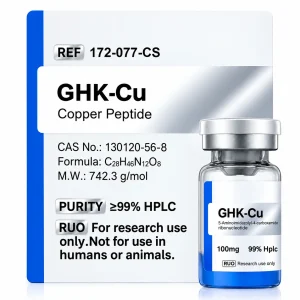
GHK-Cu has become one of the most discussed copper peptides in modern skincare and peptide research. Also known as copper tripeptide or glycyl-L-histidyl-L-lysine-copper, GHK-Cu combines the naturally occurring tripeptide GHK with copper ions, creating a bioactive copper-peptide complex that has attracted scientific interest for decades.
Researchers have investigated GHK-Cu in connection with processes involving the skin extracellular matrix, inflammation, oxidative stress, tissue repair and regeneration. At the same time, cosmetic formulators have incorporated copper peptides into products designed to support the appearance and condition of mature or environmentally stressed skin.
However, an important distinction is necessary: much of the evidence surrounding GHK-Cu comes from laboratory, cellular, animal and small human studies. Recent systematic reviews describe substantial preclinical interest while also identifying gaps in robust clinical evidence. Therefore, GHK-Cu should be viewed as a promising research and cosmetic ingredient rather than a proven treatment for medical conditions.
What Is GHK-Cu?
GHK-Cu is the copper-bound form of GHK (glycyl-L-histidyl-L-lysine), a naturally occurring three-amino-acid peptide.
GHK has been studied in biological systems because of its interactions with copper and its relationship to processes involved in tissue maintenance and extracellular-matrix biology. When copper is associated with GHK, the resulting complex is commonly referred to as GHK-Cu.
The ingredient is particularly interesting because copper is an essential trace element involved in numerous biological processes. Copper-dependent enzymes participate in processes associated with connective tissue formation, antioxidant defense and cellular function.
In cosmetic science, GHK-Cu is generally discussed as a skin-conditioning and anti-aging peptide ingredient. In research settings, scientists have investigated broader mechanisms, including matrix remodeling, inflammatory signaling and tissue repair.
GHK-Cu and Skin Research
One of the primary reasons GHK-Cu attracts attention is its potential relationship with the extracellular matrix.
The extracellular matrix provides structural support around cells and contains important components such as collagen and elastin. As skin ages, structural changes occur within this matrix, contributing to visible characteristics such as reduced firmness, fine lines and changes in elasticity.
Laboratory research has suggested that GHK-Cu may influence biological pathways associated with extracellular-matrix remodeling. These findings provide a scientific rationale for continued investigation of copper peptides in skincare.
However, laboratory activity should not automatically be interpreted as a demonstrated cosmetic or medical outcome in humans.
A 2025 review specifically examining topical GHK and GHK-Cu noted that the compounds have attracted substantial interest for anti-wrinkle applications but also highlighted limitations in published clinical evidence and questions surrounding skin permeability.
Potential GHK-Cu Benefits
The phrase “GHK-Cu benefits” is frequently searched online, but the available evidence needs to be interpreted carefully.
1. Supports Research Into Skin Appearance
GHK-Cu is widely investigated as a cosmetic peptide for applications involving the visible signs of skin aging.
Researchers have explored whether GHK-Cu can influence processes associated with skin structure and appearance. This has contributed to its popularity in peptide-based skincare formulations.
2. Interest in Collagen-Related Processes
GHK-Cu has attracted attention because of its relationship with extracellular-matrix biology and processes associated with connective tissue.
This is one reason copper peptides are frequently included in cosmetic formulations marketed around firmness, texture and the appearance of fine lines.
Nevertheless, claims that a topical GHK-Cu product will definitively increase collagen in a particular individual go beyond what the current clinical evidence can establish.
3. Antioxidant and Inflammation-Related Research
Preclinical research has investigated GHK-Cu in relation to oxidative stress and inflammatory pathways.
A recent systematic review described preclinical evidence involving antioxidant and anti-inflammatory activity, alongside research into tissue regeneration and matrix remodeling. The same review emphasized that clinical evidence remains comparatively limited.
4. Interest in Tissue Repair
GHK-Cu has also been investigated in experimental models involving tissue repair and wound-related processes.
Researchers have explored its possible effects on cellular signaling, extracellular-matrix organization and other mechanisms relevant to tissue regeneration.
This area remains scientifically interesting, but research findings should not be interpreted as evidence that consumers should use GHK-Cu to treat wounds or medical conditions without appropriate professional guidance.
5. Cosmetic Anti-Aging Applications
Copper peptides have become popular ingredients in anti-aging skincare.
They may be found in serums, creams, lotions and other formulations intended to support the appearance of smoother, firmer or healthier-looking skin.
The appeal of GHK-Cu comes partly from its combination of biological plausibility, extensive laboratory research and relatively long history of interest within cosmetic science.
How Does GHK-Cu Work?
GHK-Cu is being studied because it may interact with several biological processes rather than acting through one simple pathway.
Research has investigated its potential relationship with:
- Extracellular-matrix remodeling
- Collagen-related processes
- Cellular signaling
- Oxidative-stress regulation
- Inflammatory pathways
- Tissue-repair mechanisms
- Skin-barrier and connective-tissue biology
The copper component is also important. Copper participates as a cofactor in several enzymes involved in biological processes.
Recent evidence reviews emphasize that the chemistry of GHK-Cu is more complicated than simply describing it as “GHK plus copper.” Formulation, copper occupancy, stability, release and the chemical species actually reaching the intended biological site can influence how a product behaves.
GHK-Cu for Skin: What Does the Evidence Say?
Interest in GHK-Cu for skin has increased significantly, but the evidence should be separated into different levels.
Laboratory and Preclinical Evidence
Preclinical research provides the strongest foundation for many of the proposed mechanisms associated with GHK-Cu.
Studies have investigated cellular responses, matrix-related pathways, oxidative stress and tissue repair. These experiments can help researchers understand how a substance might work.
However, laboratory results do not automatically demonstrate effectiveness in people.
Human Studies
Human evidence is considerably more limited.
For example, an earlier randomized study investigated topical GHK-Cu following CO2 laser resurfacing. The study involved 13 participants who completed the trial. Objective assessments did not demonstrate significant differences in erythema resolution, wrinkles or overall skin quality, although participants using GHK-Cu reported higher satisfaction with overall skin quality.
More recent reviews continue to identify a need for larger, better-designed human trials.
Consequently, consumers should be cautious about websites that present every proposed GHK-Cu mechanism as an established clinical benefit.
GHK-Cu and Skin Penetration
One of the major technical questions surrounding topical GHK-Cu is skin penetration.
The outermost layer of the skin, known as the stratum corneum, forms an important barrier. Peptides can have difficulty crossing this barrier efficiently.
A 2025 review described GHK-Cu as relatively hydrophilic and noted its limited permeation through the skin barrier. Researchers are investigating delivery technologies, including encapsulation and liposomal systems, to potentially improve transport.
This means that the concentration of GHK-Cu listed on a product label is not necessarily equivalent to the amount that reaches a particular biological target.
For consumers and buyers, formulation quality can therefore be just as important as the name of the ingredient itself.
GHK-Cu Serum and Cosmetic Formulations
GHK-Cu is commonly associated with peptide serums and other topical cosmetic products.
When evaluating a GHK-Cu skincare formulation, consider factors such as:
- Ingredient transparency
- Product formulation
- Packaging
- Stability information
- Manufacturing standards
- Batch identification
- Storage instructions
- Testing documentation
- Manufacturer or supplier reputation
A professional-looking product page alone does not establish product quality.
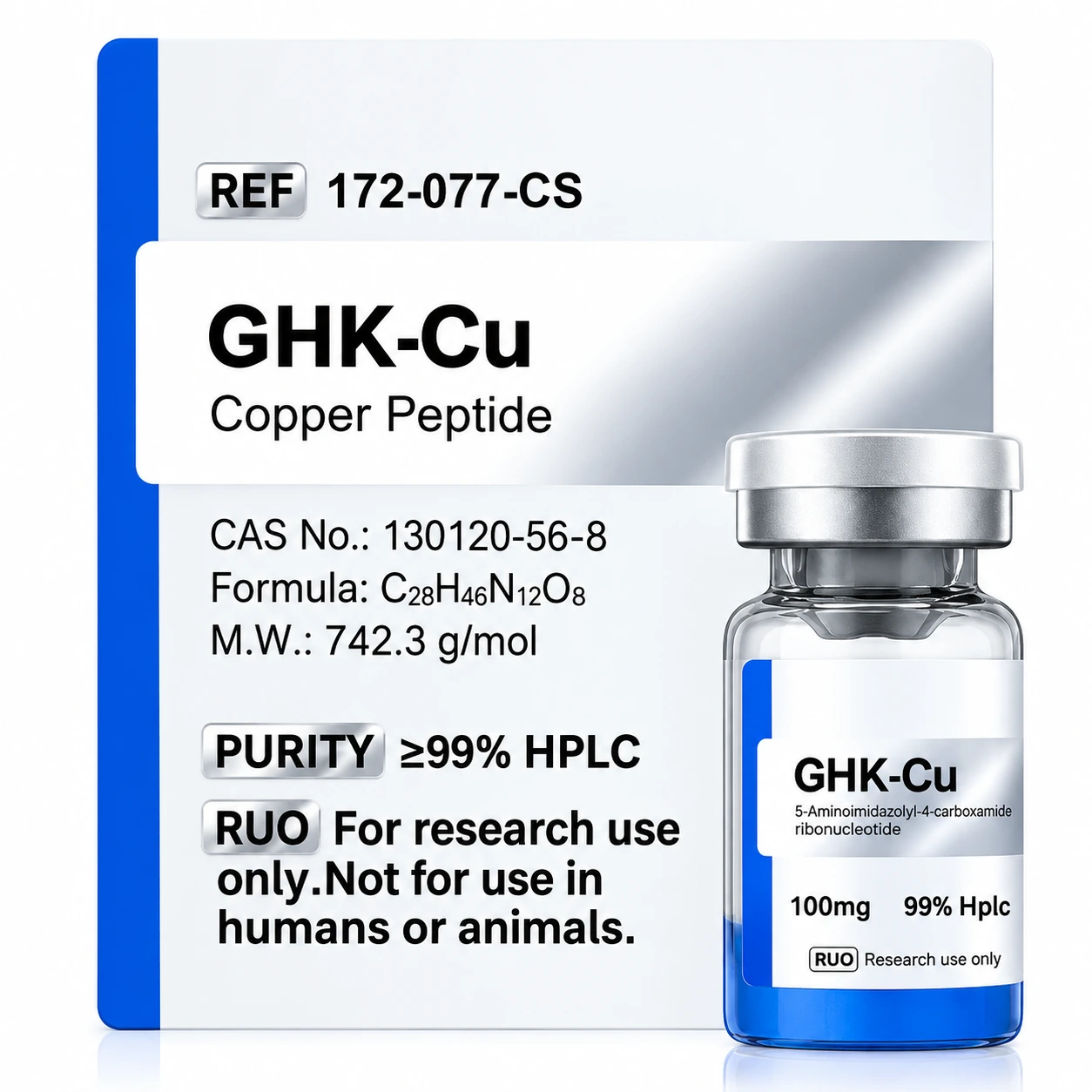
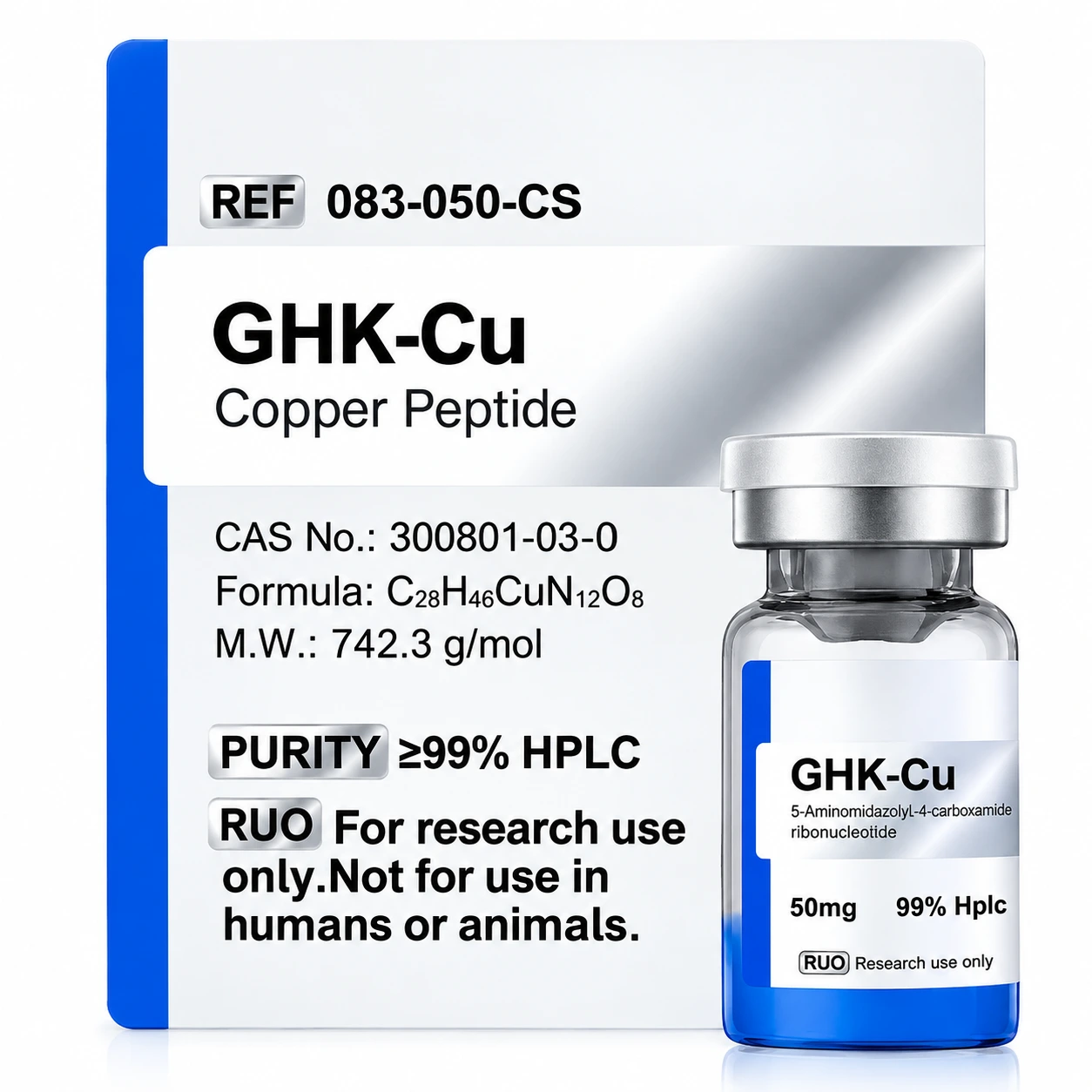
For research-oriented buyers, documentation such as a Certificate of Analysis (COA) can provide useful information about the identity, purity and testing of a particular batch. The exact information provided should be evaluated according to the intended application and applicable regulatory requirements.
Is GHK-Cu Safe?
Safety depends on the formulation, concentration, route of exposure, product quality and intended use.
Research examining copper compounds has shown that different copper-containing substances can have different irritation profiles. In one laboratory study, GHK-Cu showed low irritation potential under the tested conditions, while certain inorganic copper salts produced greater cellular responses at tested concentrations.
Importantly, laboratory findings do not guarantee that every commercial formulation will be suitable for every person.
People with sensitive skin, allergies or existing dermatological conditions should consider discussing new active skincare ingredients with a qualified healthcare professional.
For cosmetic products, safety assessment should consider the actual finished formulation rather than assuming that the safety profile of an isolated ingredient automatically applies to every product.
How to Choose a Quality GHK-Cu Product
If you are researching GHK-Cu products, purchasing decisions should focus on quality and transparency rather than marketing claims alone.
Look for Clear Ingredient Information
A reputable product should clearly identify what it contains rather than relying on vague terms such as “advanced peptide complex.”
Check Testing Documentation
Where appropriate, look for batch-specific documentation such as a COA. Relevant analytical information may help buyers assess whether the material meets the supplier’s stated specifications.
Consider Storage and Stability
Peptides can be sensitive to environmental conditions. Storage recommendations, packaging and formulation can influence product stability.
Evaluate Supplier Transparency
A professional supplier should provide clear information about product identity, specifications, testing and intended use.
Avoid Unsupported Medical Claims
Be cautious of sellers claiming that GHK-Cu can cure diseases, reverse aging or replace established medical treatments. Current research does not justify such broad claims.
GHK-Cu for Research
GHK-Cu continues to be investigated because it provides an interesting model for studying the interaction between peptides, metal ions and biological systems.
Research areas include:
- Skin biology
- Extracellular-matrix remodeling
- Tissue repair
- Cosmetic formulation
- Peptide delivery
- Liposomal delivery systems
- Copper-peptide chemistry
- Cellular signaling
- Regenerative research
Recent systematic reviews have emphasized that additional well-controlled human studies are needed before stronger clinical conclusions can be drawn.
GHK-Cu vs. Other Peptides
GHK-Cu belongs to a broader category of cosmetic and research peptides.
Unlike many simple peptide ingredients, GHK-Cu contains a copper component that is central to its identity and biological interest.
Its popularity in skincare comes from the combination of:
- A naturally occurring peptide sequence
- Copper coordination
- Extensive preclinical research
- Interest in extracellular-matrix biology
- Potential cosmetic applications
- Ongoing formulation research
However, different peptides have different structures, mechanisms and evidence bases. They should not be treated as interchangeable simply because they are all marketed as “peptides.”
Frequently Asked Questions About GHK-Cu
What does GHK-Cu stand for?
GHK-Cu refers to the copper complex of glycyl-L-histidyl-L-lysine, commonly called GHK or copper tripeptide.
What is GHK-Cu used for?
GHK-Cu is primarily encountered in cosmetic skincare formulations and scientific research. It has been investigated for mechanisms involving extracellular-matrix remodeling, oxidative stress, inflammation and tissue repair.
Is GHK-Cu the same as a copper peptide?
GHK-Cu is a type of copper peptide. The terms are sometimes used interchangeably in skincare marketing, although “copper peptide” can refer to a broader category.
Does GHK-Cu increase collagen?
Research has identified mechanisms that may relate GHK-Cu to extracellular-matrix and collagen-related processes. However, the available human clinical evidence is not strong enough to guarantee a measurable collagen increase from every topical GHK-Cu product.
Is GHK-Cu good for skin?
GHK-Cu is a popular cosmetic peptide with substantial preclinical research behind it. Human evidence remains more limited, so claims should be interpreted carefully.
Can GHK-Cu be used in skincare?
GHK-Cu is used in cosmetic skincare formulations, including serums and creams. Product suitability depends on the formulation, concentration, quality and individual skin characteristics.
What should I look for when buying GHK-Cu?
Look for transparent ingredient information, appropriate testing documentation, batch information, storage instructions and a supplier that clearly communicates intended use and product specifications.
Final Thoughts on GHK-Cu
GHK-Cu is one of the most interesting copper peptides in modern cosmetic and biochemical research. Its combination of peptide biology and copper coordination has generated decades of investigation into extracellular-matrix remodeling, antioxidant activity, inflammatory signaling and tissue-repair mechanisms.
The strongest evidence currently comes from laboratory and preclinical research, while human clinical evidence remains comparatively limited. Recent reviews continue to identify promising mechanisms but also emphasize the need for larger, well-controlled clinical studies.
For consumers, skincare professionals, researchers and buyers, the most important consideration is therefore evidence plus product quality. A well-formulated GHK-Cu product from a transparent supplier, supported by appropriate testing and realistic claims, provides a more credible basis for evaluation than exaggerated promises.
As research into copper peptides, advanced delivery systems and peptide-based skincare continues, GHK-Cu remains an active area of scientific and cosmetic interest.


Reviews
There are no reviews yet.