Pinealon 20mg: What It Is, Research, Uses, Safety and What to Know Before Buying
What Is Pinealon 20mg?
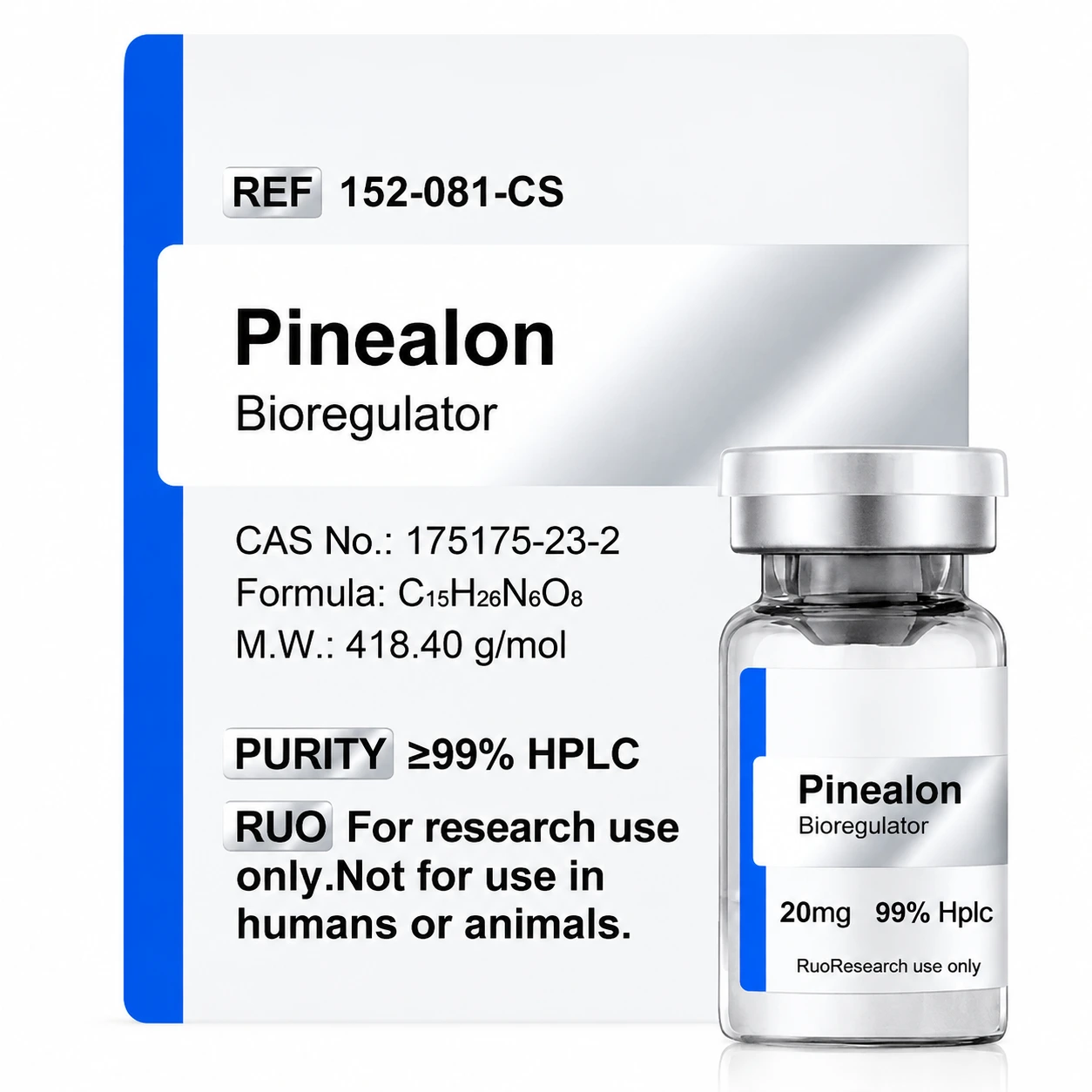
Pinealon 20mg is a name used for a peptide preparation containing Pinealon, a short synthetic peptide that has attracted interest in research concerning cellular regulation, aging-related biology and neurological processes.
Pinealon is generally discussed within the broader field of bioregulatory peptides, an area of research that investigates short peptide sequences and their possible biological effects. However, it is important to distinguish scientific investigation from established medical treatment.
Interest in Pinealon has increased among people searching online for terms such as “Pinealon peptide,” “Pinealon 20mg,” “Pinealon benefits,” and “Pinealon research.” Much of the information available online, however, goes beyond what can currently be established from high-quality human clinical evidence.
For this reason, Pinealon 20mg should be approached primarily from an evidence and product-quality perspective rather than through unsupported claims about anti-aging, cognitive enhancement, longevity or disease treatment.
Pinealon 20mg at a Glance
| Feature | Information |
|---|---|
| Product name | Pinealon 20mg |
| Category | Research peptide |
| Form | Product formulation varies by supplier |
| Research area | Bioregulatory peptide research |
| Human evidence | Limited |
| Established medical indication | Not established by the available evidence reviewed |
| Main consideration | Product identity, purity, documentation and appropriate professional guidance |
The exact composition, concentration and formulation of a product marketed as “Pinealon 20mg” can vary. Consumers should therefore examine product documentation carefully rather than assuming that every product carrying the same name is equivalent.
Pinealon Peptide Research
Scientific interest in Pinealon belongs to a wider research field involving peptides associated with biological regulation and aging-related processes.
Some peptide research has investigated compounds originating from or associated with the pineal system. For example, published research has examined epitalon, a different tetrapeptide, in experimental and limited human contexts. Animal studies have investigated biological and aging-related outcomes, while older human research has explored pineal peptide preparations. These studies should not automatically be interpreted as evidence that Pinealon 20mg produces the same effects.
This distinction is particularly important for SEO content because many websites combine research involving different peptides under a single product description.
A responsible Pinealon information page should therefore clearly distinguish:
- Pinealon-specific evidence
- Research involving related peptides
- Animal studies
- Laboratory research
- Human clinical research
- Anecdotal reports
- Commercial marketing claims
These categories do not carry the same evidentiary weight.
Why Are People Interested in Pinealon 20mg?
Interest in Pinealon is often connected with broader scientific discussions about aging, cellular regulation, neurological function and peptide biology.
Searches for Pinealon benefits frequently produce claims involving cognitive performance, memory, longevity, sleep, recovery and healthy aging. However, the existence of these claims online does not establish that Pinealon has been demonstrated to provide those benefits in appropriately controlled human trials.
This is an important consideration when evaluating any peptide product.
A scientifically responsible approach is to ask:
- What exactly is the peptide?
- What studies have tested it?
- Were the studies conducted in humans?
- How many participants were involved?
- Was there a control group?
- Was the study independently replicated?
- What formulation and dose were studied?
- Does the commercially available product match the research material?
- Has the product been independently tested?
- What is its regulatory status in the relevant country?
These questions provide a much more useful framework than relying on marketing descriptions alone.
Pinealon 20mg and Aging Research
Aging research is one of the areas frequently associated with Pinealon and related bioregulatory peptides.
Research into peptide biology has explored whether specific short peptide sequences may influence cellular signaling and other biological processes associated with aging. Nevertheless, research findings involving experimental peptide preparations should not be translated directly into claims that a commercially sold Pinealon 20mg product can slow aging or extend human lifespan.
For comparison, published research involving related pineal peptide preparations has produced findings that warrant further investigation, but the evidence base is not sufficient to establish broad clinical conclusions for every peptide product marketed in this category.
Consequently, terms such as “Pinealon anti-aging,” “Pinealon longevity,” and “Pinealon life extension” should be treated as research-related search topics rather than established medical outcomes.
Pinealon 20mg and Cognitive Research
Another reason people search for Pinealon is its association with neurological and cognitive research.
Online descriptions may refer to memory, concentration, mental clarity or other cognitive outcomes. However, it is essential to differentiate between hypotheses, laboratory observations and demonstrated clinical effects.
At present, claims about Pinealon as a proven cognitive-enhancing treatment should not be presented as established medical facts without appropriate human clinical evidence.
This distinction matters particularly when purchasing research peptides because a product marketed for laboratory research does not automatically have demonstrated safety or effectiveness for self-administration.
Is Pinealon 20mg Safe?
Safety is one of the most important considerations when researching Pinealon 20mg.
The safety profile of a peptide cannot be determined solely from its name or stated dosage. It can depend on factors including:
- Chemical identity
- Purity
- Contaminants
- Manufacturing conditions
- Sterility
- Endotoxin levels
- Storage conditions
- Formulation
- Route of administration
- Individual health circumstances
- Interactions with other substances
A label stating “20mg” identifies an amount of material; it does not by itself establish that the product is safe for human use.
Recent reviews of injectable peptide products have highlighted broader concerns around limited clinical evidence, inconsistent product quality, uncertain dosing and regulatory issues surrounding unapproved peptide products.
Anyone considering use of an experimental peptide should discuss the risks and alternatives with an appropriately qualified healthcare professional.
What Does “20mg” Mean?
The term 20mg refers to the stated quantity of peptide in the product.
It should not be interpreted as a recommended human dose.
This distinction is particularly important because online sellers may publish “20mg” product listings alongside dosing instructions that are not supported by clinical trials or approved prescribing information.
A responsible product description should therefore avoid turning the package quantity into a medical dosing recommendation.
Consumers should also verify whether the stated 20mg refers to:
- Total peptide content
- Amount per vial
- Amount per container
- Amount after reconstitution
- Another measurement specified by the manufacturer
Clear labeling is an important part of evaluating peptide products.
How to Evaluate a Pinealon 20mg Product
If you are researching a Pinealon 20mg product, product documentation should be a major consideration.
Look for transparent information about:
1. Identity
The supplier should clearly identify the compound and avoid vague descriptions.
2. Purity
A stated purity percentage should ideally be supported by analytical documentation.
3. Certificate of Analysis
A Certificate of Analysis (COA) can provide information about testing performed on a particular batch.
A useful COA should identify the tested material and provide relevant analytical results rather than simply displaying a generic certificate.
4. Batch or Lot Number
The COA should correspond to the batch or lot being supplied.
5. Testing Method
Documentation should indicate how the material was analyzed.
6. Storage Information
Peptides can require controlled storage conditions. Product documentation should explain appropriate storage requirements.
7. Supplier Transparency
A reputable research-product supplier should provide clear product information and appropriate documentation rather than relying entirely on exaggerated health claims.
Pinealon 20mg COA: Why It Matters
When researching Pinealon 20mg for sale, one of the most important quality-control questions is whether the supplier can provide batch-specific analytical documentation.
A COA may contain information such as:
- Product identification
- Batch number
- Test date
- Purity analysis
- Appearance
- Analytical methodology
- Laboratory information
However, a COA should not automatically be considered proof that a product is approved for human consumption.
Testing confirms specific characteristics measured by the laboratory. It does not establish that an experimental peptide is clinically effective or medically appropriate.
Pinealon 20mg vs. Related Peptides
Pinealon is sometimes discussed alongside other peptides such as Epitalon because of their connection with research into pineal biology and aging.
However, Pinealon and Epitalon should not be treated as interchangeable products.
Different peptides can have different:
- Amino-acid sequences
- Molecular structures
- Biological targets
- Research histories
- Experimental formulations
- Safety considerations
For example, published research has specifically studied Epitalon in experimental models, including investigations into biomarkers of aging and tumor incidence in mice. Those findings cannot simply be transferred to Pinealon.
This is an important distinction for anyone comparing peptide products online.
Buying Pinealon 20mg Online: What to Check
People searching for “buy Pinealon 20mg” or “Pinealon for sale” should focus on transparency rather than promotional claims.
Before purchasing, consider checking:
Product identity: Is the compound clearly identified?
Batch documentation: Is there a batch-specific COA?
Purity information: Are analytical results provided?
Storage instructions: Are appropriate storage conditions explained?
Supplier transparency: Is there clear information about the company and product?
Research-use labeling: Does the supplier clearly state the intended use?
Regulatory information: Does the supplier accurately explain the product’s legal and regulatory status?
Marketing claims: Does the website make exaggerated promises about curing disease, reversing aging or guaranteeing specific outcomes?
Excessive health promises should be treated cautiously, especially when clinical evidence is limited.
Pinealon 20mg: Research Use vs. Medical Treatment
One of the most important distinctions surrounding Pinealon is the difference between a research compound and an approved medicine.
A peptide can be scientifically interesting without being an established medical treatment.
The research landscape for injectable and experimental peptides remains uneven. A 2026 review noted that clinical adoption and online promotion of some injectable peptides can move ahead of high-quality evidence and regulatory consensus, emphasizing uncertainties involving efficacy, product quality and safety.
Therefore, Pinealon should not be presented as an established treatment for neurological disorders, aging, cancer, metabolic conditions or other diseases unless appropriate regulatory approval and clinical evidence support the specific claim.
Frequently Asked Questions About Pinealon 20mg
What is Pinealon 20mg?
Pinealon 20mg is a peptide product marketed for research purposes. The “20mg” designation generally describes the stated quantity of peptide in the product rather than an established therapeutic dose.
What are the benefits of Pinealon?
Various online sources associate Pinealon with aging, neurological and cellular research. However, available evidence should be evaluated carefully, and unsupported claims should not be presented as proven human health benefits.
Is Pinealon FDA approved?
Consumers should verify the current regulatory status with the relevant national authority. Marketing a peptide online does not itself establish regulatory approval for human use.
Is Pinealon safe?
Its safety cannot be assumed solely from the product name or stated quantity. Product purity, formulation, route of administration and individual health factors can all affect risk.
Is Pinealon the same as Epitalon?
No. They are different peptide compounds and should not automatically be considered interchangeable.
What is a Pinealon COA?
A Certificate of Analysis is laboratory documentation that can provide information about the testing of a particular product batch. A COA does not by itself establish clinical efficacy or regulatory approval.
Where can I learn more about Pinealon?
The best starting point is peer-reviewed scientific literature and authoritative regulatory information. Claims from commercial websites should be compared against independent evidence.
Final Thoughts on Pinealon 20mg
Pinealon 20mg is an emerging topic within the broader field of peptide and bioregulatory research. Interest in the compound is driven partly by discussions surrounding aging, cellular biology and neurological processes.
However, the distinction between scientific interest and established clinical evidence is essential.
If you are researching Pinealon, prioritize product identity, analytical testing, batch-specific documentation, supplier transparency and current regulatory information. Avoid assuming that claims about longevity, cognitive enhancement, anti-aging or disease treatment have been clinically established simply because they appear on commercial websites.
For research purposes, high-quality documentation and transparent sourcing are considerably more informative than aggressive marketing claims. For personal medical use, consultation with a qualified healthcare professional is the appropriate route for evaluating potential benefits, risks and alternatives.


Reviews
There are no reviews yet.