NAD+ 500mg: Cellular Energy, Research, Benefits & Quality Guide
NAD+ 500mg is a popular search term among people exploring cellular energy, metabolic processes, healthy ageing, and NAD-related research. NAD+, short for nicotinamide adenine dinucleotide, is a coenzyme found in living cells. It plays an essential role in energy metabolism, oxidation-reduction reactions, and several cellular maintenance processes.
Interest in NAD+ has grown as researchers investigate how NAD-related pathways change with age and how compounds that influence these pathways might affect human health. However, scientific interest should not be confused with proven clinical benefits. Although human studies show that certain NAD+ precursors can increase NAD-related biomarkers, evidence supporting many advertised anti-ageing and wellness outcomes remains mixed.
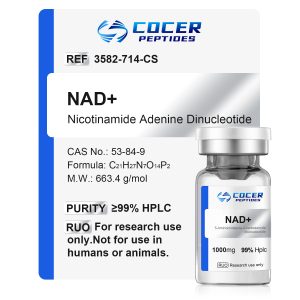
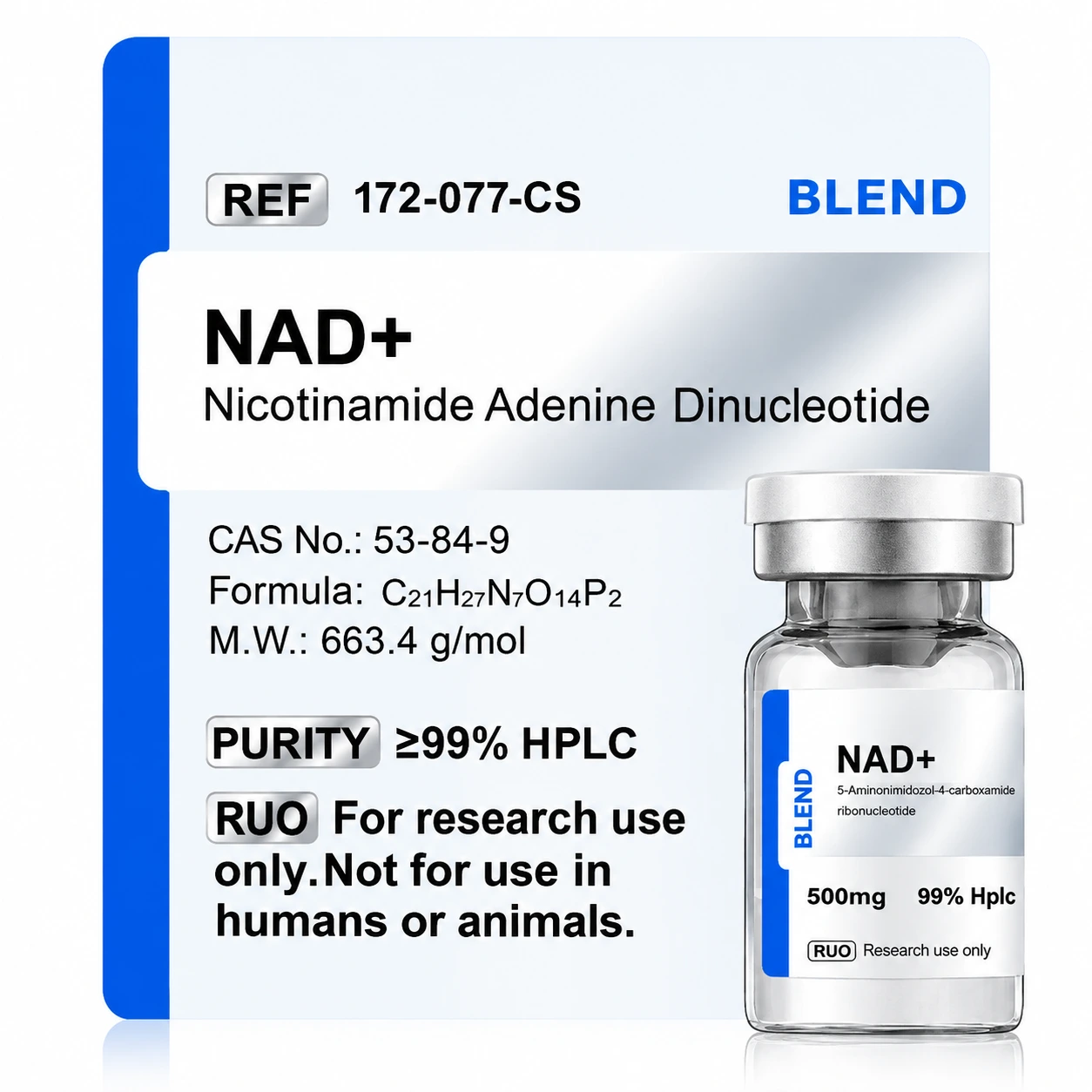
For anyone researching NAD+ 500mg, understanding the product’s formulation, intended use, documentation, and quality standards is essential. The label’s 500mg quantity alone does not establish effectiveness, safety, or an appropriate dose for an individual.
What Is NAD+ 500mg?
NAD+ stands for nicotinamide adenine dinucleotide, a coenzyme involved in numerous biochemical reactions. The body uses NAD+ in processes that help convert nutrients into usable energy and maintain normal cellular function.
The term NAD+ 500mg generally describes a product labelled as containing 500 milligrams of NAD+. The actual meaning depends on the formulation and presentation. For example, a product may be a laboratory research material or a preparation intended for use in a particular regulated setting. These are not interchangeable categories.
Before evaluating an NAD+ product, confirm:
- The precise ingredient and chemical identity.
- Whether the stated quantity refers to NAD+ itself or a related compound.
- The formulation and intended use.
- The manufacturer or responsible supplier.
- The available analytical documentation.
- The applicable regulatory status in the intended market.
These details help prevent confusion between NAD+ itself and other ingredients marketed as NAD boosters.
Understanding NAD+ and Cellular Energy
NAD+ participates in oxidation-reduction reactions, in which molecules transfer electrons during metabolism. These reactions are important for extracting energy from carbohydrates, fats, and other nutrients.
NAD+ is also involved in the activity of enzymes associated with cellular signalling and maintenance, including sirtuins and poly(ADP-ribose) polymerases. Because these enzymes use NAD+ in different ways, researchers study its role in metabolic regulation, responses to cellular stress, and ageing-related biology.
Three major areas help explain the scientific interest in NAD+.
1. Energy metabolism
Cells rely on biochemical pathways to transform nutrients into energy that can be used for normal biological functions. NAD+ participates in several of these pathways.
This established biochemical role explains why NAD+ attracts attention in research on metabolism and mitochondrial function. However, a molecule’s importance to normal physiology does not automatically mean that taking additional amounts will improve energy levels in healthy people.
2. Cellular signalling
NAD+ serves as a substrate for enzymes that influence cellular responses to stress, DNA damage, and other biological signals.
Researchers continue to investigate how NAD-related metabolism interacts with these processes. The implications depend on the specific pathway, tissue, experimental conditions, and compound being studied.
3. Ageing-related research
NAD-related metabolism has become an area of interest in ageing research. Scientists are examining changes in NAD+ availability and whether interventions that affect NAD metabolism can produce meaningful health outcomes.
A 2026 systematic review found that human studies of oral NAD+ precursors consistently demonstrated changes in NAD-related biomarkers, but effects on functional, metabolic, vascular, and other health-related outcomes were variable.
Potential Benefits: What Does the Evidence Say?
Interest in NAD+ 500mg often reflects questions about energy, recovery, metabolism, and healthy ageing. These are legitimate topics for scientific investigation, but the strength of evidence differs by outcome.
Cellular energy and metabolism
NAD+ has an established role in energy metabolism at the cellular level. Nevertheless, there is insufficient evidence to conclude that every NAD+ product improves perceived energy, exercise performance, or everyday stamina.
The effect of an intervention depends on factors such as the ingredient, route of administration, baseline health, and study design.
Healthy ageing
Researchers are investigating NAD-related pathways because of their involvement in processes associated with ageing. Much of the promising evidence comes from laboratory and animal research, while human findings remain mixed.
It would therefore be inaccurate to market NAD+ 500mg as a proven anti-ageing treatment or to promise that it reverses biological ageing.
Metabolic health
Studies of NAD+ precursors have examined several metabolic outcomes. Some have reported biochemical changes, but improvements in a biomarker do not necessarily translate into meaningful changes in health or daily functioning.
The distinction matters for customers evaluating products: scientific plausibility is not the same as demonstrated clinical effectiveness.
Exercise and recovery
NAD-related pathways are relevant to energy metabolism, so exercise and recovery have become areas of interest. However, evidence involving one precursor or experimental model cannot automatically be applied to NAD+ itself.
A responsible product description should avoid guaranteeing improved athletic performance, faster recovery, or increased endurance without appropriate clinical evidence.
NAD+ vs. NMN vs. Nicotinamide Riboside (NR)
Understanding the differences between NAD+, NMN, and NR is one of the most important parts of researching NAD-related products.
| Compound | Description | Important distinction |
|---|---|---|
| NAD+ | Nicotinamide adenine dinucleotide | A coenzyme directly involved in cellular metabolism |
| NMN | Nicotinamide mononucleotide | A precursor involved in NAD+ biosynthesis |
| NR | Nicotinamide riboside | A vitamin B3-related NAD+ precursor |
Although these compounds are connected through NAD metabolism, they differ in chemical structure, absorption, metabolism, formulation, and available clinical evidence.
Human research has demonstrated that oral nicotinamide riboside can increase blood NAD-related metabolites. In an eight-week randomized trial involving healthy overweight adults, 100mg, 300mg, and 1,000mg daily doses of NR produced dose-dependent increases in whole-blood NAD+. The findings apply to NR, not automatically to a 500mg product containing NAD+ itself.
For SEO content, it is useful to discuss these compounds together while maintaining separate product descriptions and avoiding the implication that they are interchangeable.
What Does the 500mg Label Mean?
The 500mg designation indicates the stated amount of material in a product, subject to the manufacturer’s labelling and formulation details.
It does not necessarily mean that 500mg is a clinically validated dose, that the entire amount reaches the bloodstream unchanged, or that the product produces a specific health outcome.
When reviewing an NAD+ 500mg listing, distinguish among:
- Product quantity: the stated amount in a container or unit.
- Serving amount: the quantity described for a serving, where applicable.
- Clinical dosage: an amount evaluated for a particular purpose in appropriate clinical studies.
- Route of administration: whether a product is intended for oral, injectable, or another use.
These terms should not be used interchangeably. The correct interpretation depends on the actual product label and its regulatory status.
NAD+ 500mg Product Quality and Documentation
Product quality is a central consideration when evaluating NAD+ materials. Clear documentation can help customers and qualified professionals assess identity, consistency, and suitability for the product’s stated purpose.
Ingredient identity
The product should clearly identify NAD+ rather than using a broad label such as “NAD booster” without specifying the ingredient.
This is especially important when comparing NAD+ with NMN, NR, or blends containing several ingredients.
Certificate of Analysis
A Certificate of Analysis (COA) may provide useful information about a particular batch. Depending on the product and testing requirements, relevant details can include:
- Product and ingredient identification.
- Batch or lot number.
- Analytical method.
- Test date.
- Purity or assay results.
- Relevant impurity testing.
- Laboratory identification.
The document should correspond to the batch being supplied. A generic certificate that cannot be connected to the actual lot offers less assurance.
Analytical testing
Appropriate analytical methods can help verify chemical identity and evaluate purity or composition. The relevant tests depend on the formulation and intended use.
A purity percentage alone does not prove sterility, absence of endotoxins, clinical effectiveness, or suitability for injection. Those are separate questions that require appropriate evidence and controls.
Supplier transparency
Reliable product information should explain what is being supplied, how it is characterised, what documentation is available, and what uses are intended or excluded.
Avoid relying on unsupported claims such as “100% safe,” “guaranteed anti-ageing,” or “clinically proven” when the evidence does not substantiate them.
NAD+ Injectable Products: Important Safety Considerations
NAD+ products intended for injection require particular caution. Materials labelled for food or supplement use are not automatically appropriate for sterile drug preparation.
The US Food and Drug Administration has warned compounders about using food-grade NAD+ ingredients in intravenous products without appropriate processing. It has also reported adverse events following NAD+ injections, including severe chills, shaking, vomiting, and fatigue, with some cases requiring medical attention. The agency noted that these reactions were consistent with excessive endotoxin levels.
This is a critical distinction for anyone encountering an NAD+ 500mg vial online. A stated quantity or a high purity result does not establish that a material is sterile or safe to inject.
Do not inject a product unless it is appropriately prescribed and supplied for that purpose by a qualified, regulated source. Food-grade, supplement-grade, and research-only materials should not be treated as injectable medicines.
How to Evaluate an NAD+ 500mg Product
When comparing products, focus on verifiable information rather than headline claims.
1. Confirm the ingredient. Check whether the product contains NAD+ itself, NMN, NR, or a mixture.
2. Read the full label. Review the stated quantity, formulation, intended use, manufacturer, and any relevant warnings.
3. Check the documentation. Look for batch-specific analytical results and a clearly identified testing laboratory where appropriate.
4. Verify the regulatory category. Requirements differ between supplements, research materials, compounded preparations, and approved medicines. Rules also vary by country.
5. Assess the claims. Be cautious when a listing promises guaranteed longevity, disease treatment, dramatic energy improvements, or reversal of ageing.
6. Consider the intended route. An ingredient suitable for one use is not automatically suitable for another, particularly where sterility is required.
These checks help create a more transparent basis for comparing NAD+ products without confusing marketing language with scientific evidence.
Frequently Asked Questions About NAD+ 500mg
What is NAD+ 500mg used for?
The answer depends on the specific product and its intended use. NAD+ is a coenzyme involved in cellular metabolism, while products labelled 500mg may be marketed in different categories. The quantity alone does not establish a proven medical use.
Is NAD+ 500mg the same as NMN 500mg?
No. NAD+ and NMN are different compounds. NMN is involved in NAD+ biosynthesis, but evidence concerning NMN cannot automatically be applied to NAD+ products.
Does NAD+ 500mg increase energy?
NAD+ plays a role in cellular energy metabolism, but that does not prove that a particular product will improve subjective energy or reduce fatigue. Product-specific clinical evidence is needed to substantiate such claims.
Is NAD+ 500mg proven to reverse ageing?
No. Research into NAD metabolism and ageing is ongoing. Current human evidence does not establish NAD+ 500mg as a proven treatment for reversing ageing.
What should I look for on an NAD+ COA?
Look for ingredient identity, batch number, relevant analytical results, test methods, dates, and laboratory details. The appropriate tests depend on the formulation and intended use.
Is an NAD+ 500mg vial safe to inject?
The label alone cannot establish injectable safety. Sterility, endotoxin control, appropriate formulation, and regulatory status are critical. FDA warnings specifically address risks associated with using unsuitable NAD+ ingredients in sterile preparations.
Are NAD+ supplements and NAD+ injections equally well studied?
No. Evidence differs by compound and delivery route. A 2026 systematic review found no eligible clinical-outcome trials of intravenous or intramuscular NAD+ itself for anti-ageing or wellness indications, highlighting an important evidence gap.
Conclusion: Making an Informed Decision About NAD+ 500mg
NAD+ 500mg is a useful search term for exploring a coenzyme central to cellular metabolism and an active area of scientific research. Its relevance to energy production, cellular signalling, and ageing-related biology explains the growing interest in NAD-related products.
However, the strongest product information combines scientific context with clear limits on what the evidence proves. Research involving NMN or NR should not be presented as direct evidence for NAD+ itself, and biochemical changes should not be equated with guaranteed improvements in health.
When evaluating an NAD+ 500mg product, prioritise accurate ingredient identification, transparent labelling, appropriate batch documentation, relevant quality testing, and a clear statement of intended use. For injectable products, sterility and endotoxin controls are essential—not optional extras.
An evidence-led approach helps customers understand the product more clearly and supports more credible, trustworthy product content.


Reviews
There are no reviews yet.