BPC-157: Research, Potential Benefits, Safety and Peptide Quality Guide
Introduction to BPC-157
BPC-157 has attracted growing interest in peptide research because of its proposed role in cellular signaling, tissue protection, and biological repair processes. Researchers have investigated this synthetic peptide in preclinical models involving tendons, muscles, ligaments, the gastrointestinal tract, and other biological systems.
Interest in BPC-157 has also grown among people searching for information about recovery, sports science, and regenerative medicine. However, popularity should not be confused with clinical proof. Much of the research has been conducted in animals, and the available human studies are too limited to establish its effectiveness or long-term safety.
For anyone researching BPC-157, understanding its biological background, current evidence, regulatory status, and analytical quality considerations is essential. This guide explains what BPC-157 is, why scientists study it, what the available research suggests, and which questions remain unanswered.
Important: BPC-157 is an investigational compound, not an FDA-approved treatment for injury recovery or other medical conditions. It should not replace medical assessment or established treatment.
What Is BPC-157?
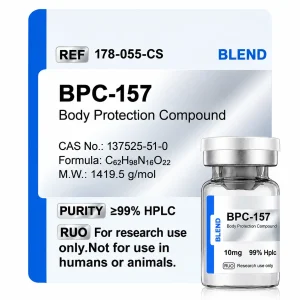
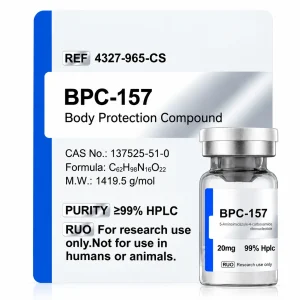
BPC-157 stands for Body Protection Compound-157. It is a synthetic peptide consisting of 15 amino acids, commonly described in scientific literature as a pentadecapeptide.
The compound has been studied for potential biological activity involving tissue responses, inflammatory signaling, vascular processes, and cellular protection. These areas have made it a subject of interest in experimental pharmacology and regenerative research.
Unlike approved medicines, BPC-157 does not have an established, regulator-approved therapeutic indication, standardized clinical dosage, or validated treatment protocol for routine human use.
Researchers continue to investigate its biological properties, but additional work is needed to determine how findings from laboratory and animal models might translate into meaningful outcomes for people.
How Does BPC-157 Work?
The proposed mechanisms of BPC-157 are an important focus of preclinical research. Studies have examined several pathways that may be involved in tissue responses and cellular signaling.
1. Cellular signaling and tissue responses
Experimental research suggests that BPC-157 may influence signaling pathways associated with cellular survival, migration, and tissue responses. These observations provide hypotheses for future research, but they do not demonstrate that the peptide reliably repairs injuries in humans.
2. Angiogenesis and vascular signaling
Angiogenesis is the formation of new blood vessels. Blood vessel development is relevant to many normal physiological processes, including tissue maintenance and repair.
Some animal studies suggest that BPC-157 may affect pathways associated with vascular function. However, the implications of these findings for human health, including the possible risks of altering blood vessel growth, remain insufficiently understood.
3. Inflammatory processes
Inflammation is part of the body’s response to injury and infection. Research into BPC-157 has explored its potential influence on inflammatory signaling in experimental models.
Inflammation is complex, however, and reducing a particular inflammatory marker does not necessarily mean a compound improves healing or produces a beneficial clinical outcome.
4. Gastrointestinal research
BPC-157 has also been investigated in experimental models involving the gastrointestinal tract. This has contributed to interest in its possible cytoprotective properties.
These findings should be interpreted cautiously. They do not establish BPC-157 as an effective treatment for ulcers, inflammatory bowel disease, or other digestive disorders.
A critical distinction is that a proposed biological mechanism is not the same as a proven medical benefit. Further controlled studies are necessary to determine whether the effects observed in preclinical research have clinical significance.
Potential Research Applications of BPC-157
Scientific interest in BPC-157 covers several research areas. The evidence varies by model and application, and no established human treatment benefit can currently be assumed.
Tendon and ligament research
Tendons connect muscles to bones, while ligaments help stabilize joints. Both tissues can be challenging to study because their structure, blood supply, and response to injury differ from those of many other tissues.
Animal research has explored whether BPC-157 affects tendon and ligament healing processes. These studies have contributed to interest in the peptide among sports medicine researchers.
Nevertheless, results in animal models cannot establish that BPC-157 accelerates tendon recovery, restores normal tissue strength, or prevents reinjury in humans.
Muscle recovery research
Muscle injury and repair involve inflammation, cellular activity, blood supply, and tissue remodeling. Preclinical studies have investigated BPC-157 in models involving muscle injury.
These findings may help scientists identify potential mechanisms for further investigation. They do not justify marketing the compound as a proven muscle recovery product or performance-enhancing treatment.
Bone and connective tissue research
Researchers have explored BPC-157 in experimental models involving bone and connective tissue. Such work may contribute to broader understanding of tissue biology.
However, claims that BPC-157 reliably heals fractures, treats joint disorders, or regenerates cartilage in people are not supported by robust clinical evidence.
Gastrointestinal and cellular protection research
Laboratory and animal research has examined possible effects on gastrointestinal tissue and cellular protection. These areas remain investigational and require more extensive validation.
A 2025 systematic review of BPC-157 in orthopaedic sports medicine found promising preclinical observations but emphasized the substantial gap in human safety evidence. A subsequent 2026 systematic review of human evidence also judged the available clinical studies to be of poor methodological quality, with very low certainty overall. (Sources: PubMed reviews, PMID 40756949 and PMID 42885452.)
What Does Human Research Tell Us?
Human research is essential for determining whether a compound is safe and effective for a specific purpose.
A 2026 systematic review identified three small human studies involving a total of 30 participants across different applications. The studies included retrospective reports and a small pilot study, rather than large, well-controlled clinical trials. Although improvements were reported in some participants, the reviewers rated the certainty of evidence as very low.
This distinction matters for several reasons:
- Small studies may not identify uncommon or delayed adverse effects.
- Uncontrolled studies cannot reliably separate treatment effects from other explanations.
- Different formulations and administration routes may produce different exposure and risk profiles.
- Short follow-up periods cannot establish long-term safety.
- Preliminary results do not demonstrate that a treatment is effective for the general population.
Consequently, BPC-157 should be considered investigational. Stronger conclusions require well-designed clinical trials, standardized materials, suitable comparison groups, and transparent reporting of both benefits and adverse events.
Is BPC-157 Safe?
The safety profile of BPC-157 has not been adequately established for routine human use.
The absence of reported adverse events in a small study does not prove that a substance is safe. Larger studies and longer follow-up are needed to identify potential complications, interactions, and risks associated with different formulations or administration routes.
The US Food and Drug Administration has identified concerns about compounded BPC-157, including possible immunogenicity for certain routes of administration and difficulties associated with peptide impurities and active pharmaceutical ingredient characterization. The agency has stated that it has limited safety-related information for the proposed routes and cannot determine whether the substance would cause harm in humans.
Important safety considerations include:
- Uncertain human effects: Long-term safety and clinical effectiveness have not been established.
- Product quality: Unregulated products may have inaccurate labeling, contamination, or inconsistent peptide content.
- Impurities: Peptide-related impurities and degradation products can create quality and safety concerns.
- Immune responses: The potential for immune reactions depends on factors that require further investigation.
- Administration risks: Nonstandard or injectable preparations may introduce additional risks, including contamination and infection.
- Interactions: Potential interactions with medicines and other compounds are insufficiently characterized.
People experiencing an injury or medical condition should consult a qualified healthcare professional rather than rely on an investigational peptide. BPC-157 should not be used as a substitute for evidence-based care.
Is BPC-157 FDA Approved?
No. BPC-157 is not FDA-approved for human medical treatment.
Its appearance in scientific publications, online product catalogues, or discussions about compounding does not constitute regulatory approval. The FDA’s consideration of a substance in a compounding advisory process also does not establish that the substance is approved or proven safe and effective.
Regulatory requirements differ by country. Researchers, laboratories, and businesses should verify the rules applicable to their location, intended use, and product category before making claims or handling the compound.
For website owners, accurate regulatory language is important for both consumer trust and responsible search visibility. Avoid describing BPC-157 as an approved medicine, a guaranteed healing solution, or a clinically proven treatment.
BPC-157 Research Material: Understanding Quality and Documentation
For legitimate laboratory research, material characterization and documentation are important parts of evaluating a peptide.
A supplier’s product description alone does not establish identity, purity, composition, or suitability for a particular experiment.
Certificate of Analysis (COA)
A Certificate of Analysis should provide relevant information about the tested material. Depending on the product and testing programme, useful documentation may include:
- Peptide identity and analytical confirmation
- Reported purity and the method used to determine it
- Batch or lot identification
- Testing date and laboratory details
- Relevant impurity information
- Storage and handling information supported by stability data
A COA should correspond to the specific batch being offered. A generic document or an unverified certificate is not sufficient evidence that a product matches its label.
Analytical testing
Analytical techniques such as high-performance liquid chromatography (HPLC) and mass spectrometry may help assess purity and molecular identity when appropriately validated and interpreted.
However, a high reported purity percentage does not establish sterility, endotoxin status, stability, clinical safety, or therapeutic effectiveness. These are distinct quality attributes that require suitable testing and documentation.
Batch consistency and traceability
Traceable batch records can help laboratories link a material to its analytical results and handling history. Clear documentation also supports reproducibility when experimental findings need to be compared across studies.
For research-focused websites, explain these quality considerations accurately without implying that testing alone makes an unapproved peptide safe for human administration.
BPC-157 vs Other Research Peptides
BPC-157 is sometimes discussed alongside other experimental peptides, including TB-500 and GHK-Cu. These compounds are not interchangeable.
They differ in chemical structure, proposed biological activity, available evidence, and regulatory status. Results from research on one peptide should not be used to substantiate claims about another.
For example, studies of a different compound’s effect on cellular signaling or tissue responses do not prove that BPC-157 produces the same effect. Comparisons should be based on specific evidence rather than broad claims about recovery or regeneration.
Anyone reviewing research peptides should examine the evidence for each compound separately and distinguish animal findings from human clinical outcomes.
Frequently Asked Questions About BPC-157
What is BPC-157 used for in research?
BPC-157 has been studied in preclinical models involving tendon, muscle, ligament, gastrointestinal, and other tissue-related processes. These are research areas, not established human treatment indications.
Does BPC-157 promote healing?
Some animal studies report effects associated with tissue repair and related biological pathways. There is not enough high-quality human evidence to conclude that BPC-157 reliably improves healing in people.
Is BPC-157 a naturally occurring peptide?
BPC-157 is a synthetic peptide associated with research into a sequence derived from a protein found in gastric juice. Its synthetic research form should not be assumed to have the same safety profile as naturally occurring biological substances.
Is BPC-157 approved for human use?
BPC-157 is not FDA-approved as a human medicine. Its clinical safety and efficacy remain insufficiently established.
What does BPC-157 purity mean?
Purity is an analytical measure of the proportion of the target material detected under a specified test method. It does not, by itself, establish sterility, absence of all contaminants, stability, or suitability for human use.
Why is a Certificate of Analysis important?
A batch-specific COA can provide evidence about identity and selected quality attributes. Its value depends on the reliability of the testing, the methods used, and whether the report can be verified.
Can BPC-157 replace medical treatment?
No. It should not replace medical assessment, rehabilitation, prescribed treatment, or other evidence-based care.
Conclusion: A Research-Focused Approach to BPC-157
BPC-157 remains a subject of scientific interest because of findings from experimental research into cellular signaling and tissue-related processes. However, important questions about its clinical effectiveness, formulation, appropriate use, and long-term safety remain unanswered.
The current evidence does not support presenting BPC-157 as a proven treatment for injuries, digestive conditions, or other medical problems. More rigorous research is necessary before reliable conclusions can be drawn about its potential role in human medicine.
For laboratories and readers exploring BPC-157, the most responsible approach is to prioritize credible scientific evidence, transparent material documentation, validated analytical methods, and accurate regulatory information.
At Mei Peptide Shop, research-related content should help readers make informed distinctions between a compound’s scientific interest and its established clinical status. Clear descriptions, verifiable quality documentation, and evidence-based communication support a more trustworthy research-information experience.


Reviews
There are no reviews yet.